Phân tích SMM: Quý 3 năm 2025, khoản thanh toán niken và coban FOB Hàn Quốc cho khối lượng đen cực dương ternary duy trì ổn định nhìn chung, nhưng chênh lệch giá khu vực dần thu hẹp; đồng thời, xu hướng gia tăng nhập khẩu của Nhật Bản, Hàn Quốc và Đông Nam Á xuất hiện cùng lúc, cho thấy sự tái cấu trúc của các dòng chảy xuyên biên giới, với Đông Nam Á dần trở thành giai đoạn then chốt cho gia công và tái xuất sản phẩm trung gian.
I. Khoản thanh toán niken và coban FOB Hàn Quốc cho khối lượng đen c cực dương ternary c củng cố trong ổn định, nhu cầu nước ngoài thúc đẩy phục hồi giá
Đến cuối tháng 10, khoản thanh toán niken và coban FOB Hàn Quốc cho khối lượng đen cực dương ternary duy trì trong phạm vi 89–93, tăng khoảng 2 hệ số so với giữa tháng 8, thể hiện hiệu suất giá t tổng thể ổn định nhưng tăng. Phản hồi thị trường cho thấy tốc độ giao hàng nước ngoài chậm lại nhẹ gần đây, nhưng giá giao dịch vẫn vững, phản ánh sự hỗ trợ tiếp tục cho nhu cầu nguyên liệu niken trung và cao.
Biểu đồ 1: Xu hướng khoản thanh toán niken và coban FOB Hàn Quốc cho khối lượng đen c cực dương ternary, tháng 8–tháng 10 năm 2025
Như thể hiện trong Biểu đồ 1, từ cuối tháng 8 đến cuối tháng 10 năm 2025, khoản thanh toán niken và coban FOB Hàn Quốc cho khối lượng đen cực dương ternary thể hiện xu hướng tổng thể ổn định với mức tăng nhẹ. Từ cuối tháng 8 đến giữa tháng 9, khoản thanh toán duy trì quanh 89, với sự ổn định thị trường tương đối trong giai đoạn này, chủ yếu chịu ảnh hưởng bởi mức tồn kho cao tại các nhà máy tái chế ở Nhật Bản và Hàn Quốc cùng lịch trình đơn hàng bị trì hoãn bởi một số nhà xuất khẩu, dẫn đến hoạt động giao dịch hạn chế. Bước vào cuối tháng 9, khoản thanh toán FOB ghi nhận lần tăng đầu tiên lên 90, với một số nhà máy tái chế Hàn Quốc báo cáo sự phục hồi dần trong nhu cầu nội địa cho phế liệu niken trung và cao và tăng yêu cầu báo giá từ hạ nguồn cho khối lượng đen c cực dương cao cấp. Đến cuối tháng 10, giá chào tăng thêm lên 91, đạt mức cao nhất trong gần hai tháng.
Tốc độ thay đổi giá tương ứng với đặc điểm cung-cầu. Tồn kho cao tại các nhà máy tái chế ở Nhật Bản và Hàn Quốc cùng lịch trình đơn hàng bị trì hoãn bởi các nhà xuất khẩu dẫn đến ít giao dịch hơn từ tháng 8 đến giữa tháng 9; sau cuối tháng 9, nhu cầu nội địa phục hồi cho phế liệu niken trung và cao đẩy giá chào lên; đến cuối tháng 10, giá ổn định và phục hồi, cho thấy sự c củng cố liên kết giá giữa các khu vực.Tổng quan, mức tăng trong khoản phải trả cho niken và coban FOB Hàn Quốc đối với khối đen c cực dương ternary phản ánh sự phục hồi theo giai đoạn của nguyên liệu thô tái chế hàm lượng niken cao. Cùng với những điều chỉnh cơ cấu nguyên liệu thô tại thị trường Đông Nam Á và nhu cầu hạ nguồn đang phục hồi, giá dự kiến sẽ duy trì vững trong ngắn hạn.
II. Nhập khẩu Khối đen tại Châu Á Phục hồi, Vai trò Trung chuyển của Đông Nam Á được Nhấn mạnhBiểu đồ-2: Phân bổ Nhập khẩu Khối đen, Tháng 8-Tháng 9 năm 2025
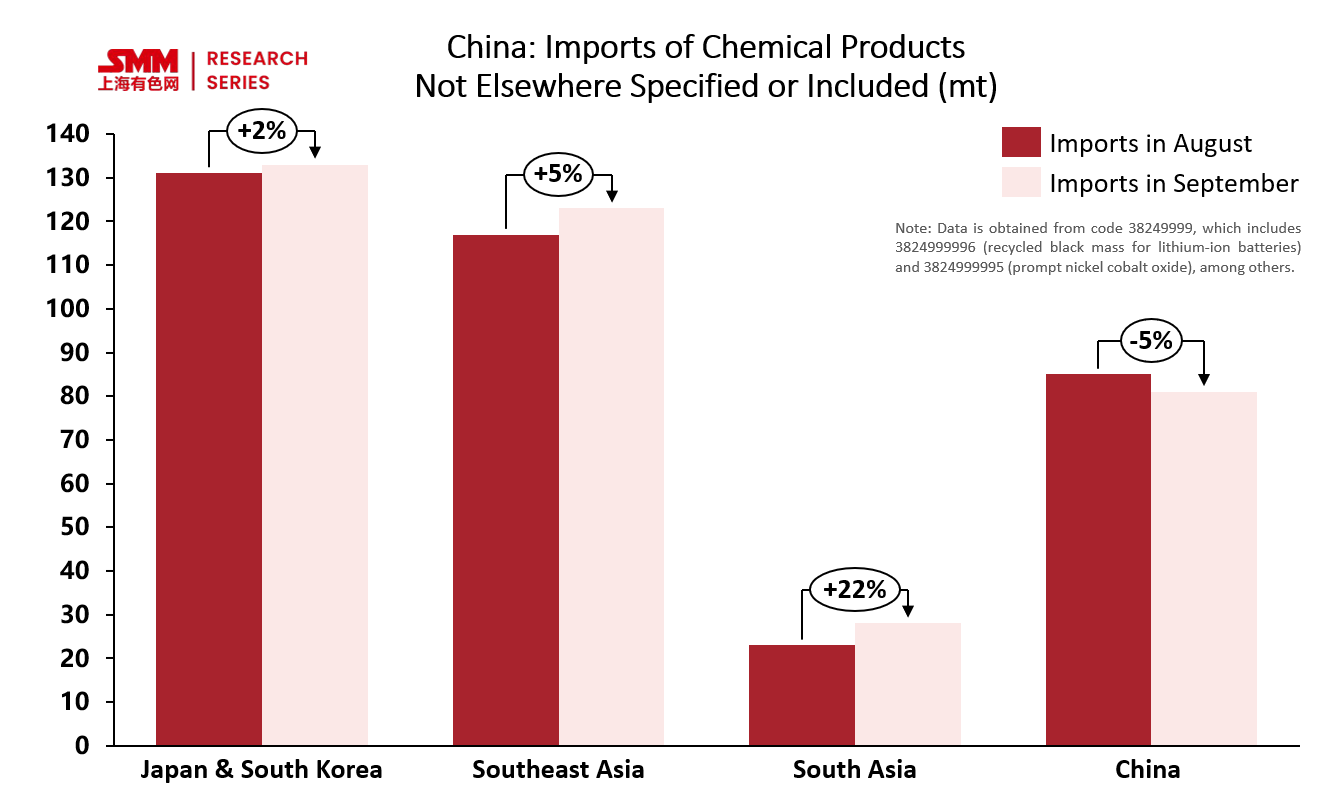
Biểu đồ-2: Phân bổ Nhập khẩu Khối đen, Tháng 8-Tháng 9 năm 2025
Lưu ý: Dữ liệu được lấy từ mã số 38249999, bao gồm 3824999996 (khối đen tái chế cho pin lithium-ion) và 3824999995 (hydroxit niken-coban thô), cùng các mã khác.
Kể từ tháng 8, khi Trung Quốc dỡ bỏ hạn chế đối với việc xuất nhập khẩu khối đen nước ngoài đủ tiêu chuẩn, những thay đổi mới đã xuất hiện trong dòng chảy khối đen trong thị trường châu Á. Đồng thời, pin thải loại từ châu Âu và Bắc Mỹ đang đẩy nhanh dòng chảy vào Đông Nam Á và Hàn Quốc, cung cấp sự hỗ trợ ổn định cho nguồn cung khối đen trong khu vực. Xu hướng tại các thị trường Nhật Bản và Hàn Quốc đã phân kỳ so với Trung Quốc. Nhật Bản và Hàn Quốc, được hưưởng lợi từ công nghệ trưưởng thành và lượng t tồn kho tương đối đầy đủ, đã duy trì khối lượng nhập khẩu cao, mặc dù tốc độ tăng trưởng chậm lại. Tại Trung Quốc, nhập khẩu tháng 9 vẫn duy trì ở mức khoảng 800 tấn, cho thấy nhu cầu thu mua trong nước đối với các sản phẩm trung gian nước ngoài vẫn linh hoạt. Hiện tại, t tổng công suất xử lý khối đen tại châu Á là khoảng 2,5–3 triệu tấn mỗi năm. Một số doanh nghiệp trong nước tiếp tục thể hiện sự quan tâm mua hàng tích cực đối với các danh mục như khối đen cực dương ternary và LCO, hỗ trợ sự ổn định nhập khẩu tổng thể.
III. Kết luận
Tổng quan, kể từ quý III năm 2025, thị trường khối đen châu Á đang trải qua những điều chỉnh cơ cấu. Khoản phải trả cho niken và coban đối với khối đen c cực dương ternary trên cơ sở FOB Hàn Quốc duy trì ở mức cao, cho thấy nhu cầu đối với nguyên liệu thô tái chế hàm lượng niken cao đang phục hồi và sự hỗ trợ giá tiếp tục vững chắc. Khi tốc độ xuất khẩu từ Nhật Bản và Hàn Quốc chậm lại và công suất tái chế cùng thủy luyện tại Đông Nam Á tăng tốc giải phóng, cơ cấu dòng chảy khối đen trong khu vực đang được định hình lại. Đông Nam Á đang dần trở thành trung tâm trung chuyển và chế biến then chốt kết nối nguyên liệu thô thượng nguồn với quá trình tái chế tháo dỡ hạ nguồn. Trong ngắn hạn, giá cả Hàn Quốc dự kiến sẽ duy trì vững, trong khi trung hạn, năng lực hấp thụ công nghiệp và sức mạnh định giá của Đông Nam Á sẽ càng được củng cố.
![[SMM Flash] Dự án Lithium Bandeira của Brazil khởi động mua sắm thiết bị có thời gian chờ dài](https://imgqn.smm.cn/usercenter/wZUBk20251217171729.jpg)
![[SMM Weekly Review] Thị trường tái chế thủy luyện tuần này: Giá lithium giảm trở lại, giá black mass LFP theo đó tăng (8-11 tháng 6 năm 2026)](https://imgqn.smm.cn/usercenter/yZfeI20251217171727.jpg)